Here's How Historical Data Can Play a Significant Role in Reducing AI Model Hallucination
By Debbie Burgin
Every few weeks, another article pops up about AI hallucinations.
The conversation is usually the same.
The model made something up. It cited a source that doesn’t exist. It answered a question with complete confidence… and got it completely wrong.
The obvious question is, “How do we stop AI from hallucinating?”
Most of the discussion that follows focuses on the models themselves. Build larger models. Improve the architecture. Fine-tune them differently. Develop better inference techniques. Add retrieval. Improve prompting.
All of those things matter. But I sometimes wonder if we’re asking the wrong questions.
Instead of asking how we build smarter models, maybe we should also be asking whether we’re giving those models the best possible education. After all, every AI model learns from data.
Not just facts, but relationships. Patterns. Context. Language. How ideas connect to one another. How knowledge changes over time.
When people say that AI “learns,” what they’re really describing is a model identifying patterns across enormous amounts of information. It doesn’t understand those patterns the way humans do. It recognizes statistical relationships and uses them to predict what should come next.
That’s very powerful.
But it also means that the quality of those predictions depends entirely on the quality and completeness of the information the model has learned from.
Imagine asking someone to write the history of modern medicine after only letting them read medical journals published in the last five years.
Could they do it? Probably.
Would they understand why certain treatments fell by the wayside? Why others became the standard of care? How terminology evolved? Which discoveries completely changed the direction of research?
Probably not.
Now imagine giving that same person access to decades—or even centuries, of medical literature.
Suddenly, they’re. not just learning what we know today. They’re learning how we came to know it.
That distinction matters.
Knowledge doesn’t appear overnight. Scientific breakthroughs build on previous discoveries.
Engineering standards evolve through decades of testing and refinement. Financial markets respond to cycles that repeat over generations. Legal systems develop through years of precedent.
Even language itself changes continuously.
Historical data captures that evolution. And I think that’s something we don’t talk about nearly enough in AI.
When we discuss training data, the conversation often revolves around quantity.
How many tokens?
How many documents?
How many billions of parameters can the model support?
Those are important questions. But another question deserves just as much attention.
What kind of knowledge are we giving these models? Because not all data contributes equally.
A carefully curated historical dataset doesn’t just increase the amount of information available to a model.
It adds context. It shows how ideas mature. It reveals how assumptions change.
It preserves terminology that may no longer be common but is still essential for understanding older research, technical documentation, legal records, or scientific literature.
In many ways, historical data provides the connective tissue between where we’ve been and where we are today.
Does that mean historical data will eliminate AI hallucinations?
Of course not.
Hallucinations are influenced by many factors, including model architecture, training objectives, inference techniques, retrieval systems, and prompting strategies.
There is no single solution. But I do think we sometimes misunderstand what a hallucination represents.
We sometimes describe it as the model ‘making something up’.
Sometimes that’s true. But sometimes what looks like a hallucination is actually the model revealing the limits of the knowledge it was given.
If the training data lacks depth, if important historical context is missing, if decades of foundational knowledge were never part of the learning process, the model can only reason from what it knows. And if what it knows is incomplete, its answers may be incomplete too.
That’s not just a model problem, it’s also a data problem.
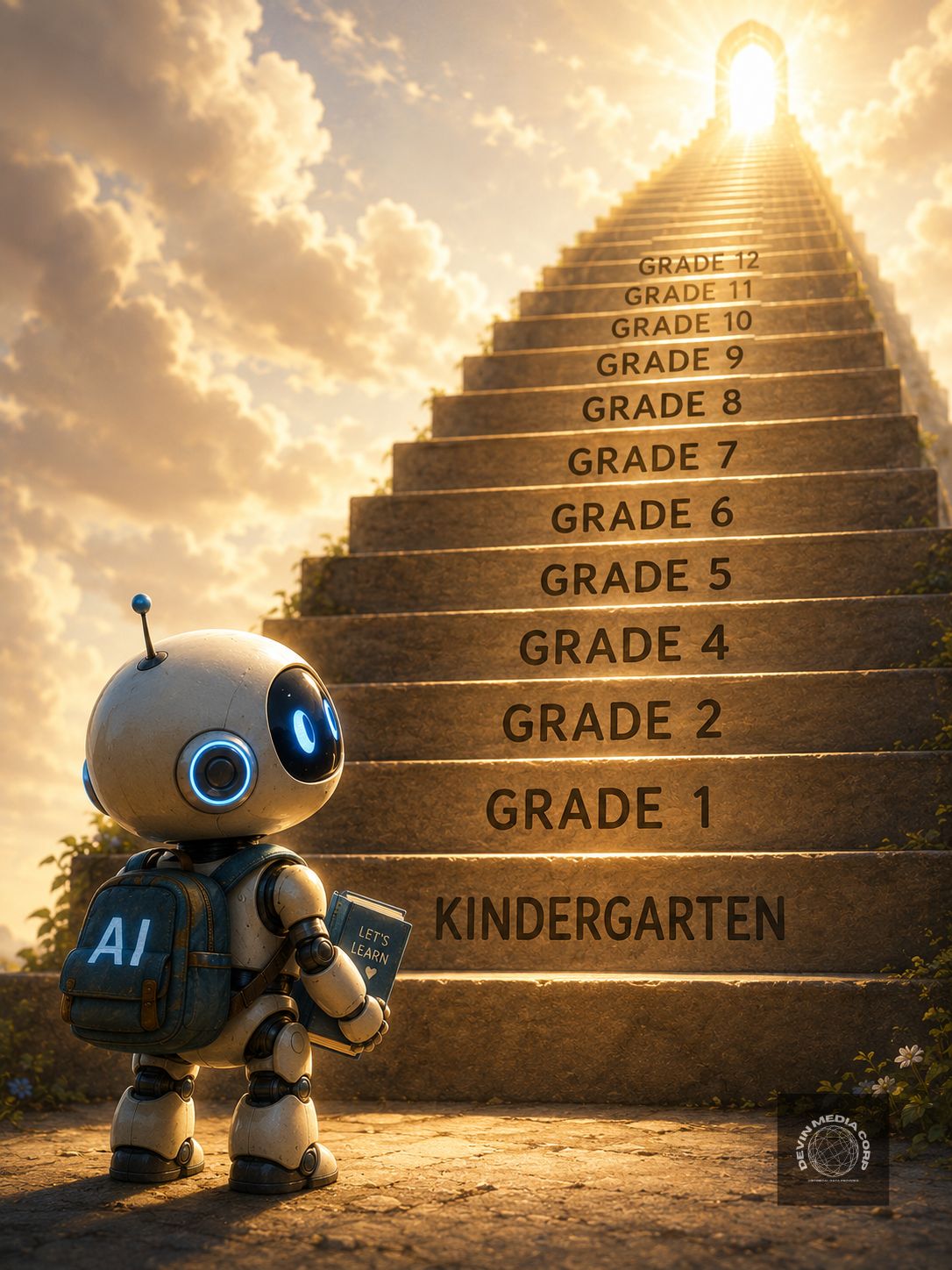
Think about how we educate people. No one would expect a student to walk into Grade 12, skip everything that came before it, and successfully graduate high school.
That would be crazy.
Before they can understand algebra, they first have to learn to do basic math. Before they can analyze literature, they have to learn to read.
Before they can study chemistry, they need a foundation in mathematics and the sciences.
Every year builds on the one before it. Knowledge is cumulative.
Now imagine trying to educate an AI model.
If we expect it to understand today’s world without exposing it to the historical progression of knowledge that shaped today’s world, are we really giving it the strongest possible foundation?
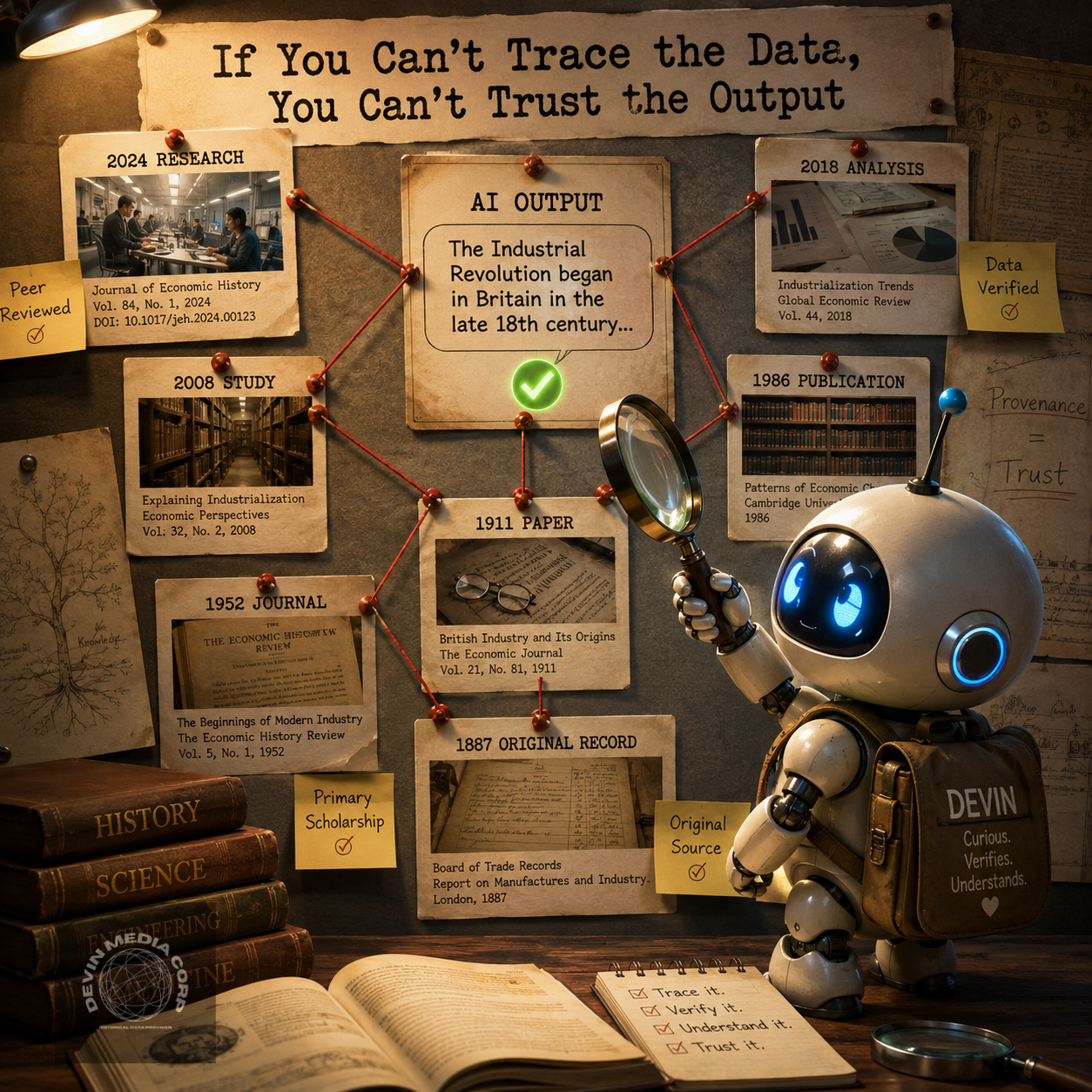
Historical publications don’t simply tell us what was known at a particular moment in time.
They document how knowledge evolved. They capture the questions researchers were asking, the discoveries that changed entire fields, the ideas that were challenged, refined, or eventually replaced.
A medical journal from 1925 isn’t valuable just because it’s old. It’s valuable because it represents another step in the progression of medical knowledge.
The same is true for engineering, finance, law, agriculture, manufacturing, and virtually every other discipline. Each generation of knowledge builds upon the one before it.
Maybe our training data should too.
As AI continues to evolve, I suspect we’re going to spend a great deal of time improving models. And we should.
But I also think we’re going to spend a lot more time talking about data quality, data diversity, and the importance of giving AI systems a richer understanding of the world they’re expected to reason about.
Because intelligence doesn’t start with the algorithm. It starts with what we choose to teach it.
Maybe that’s why historical data matters more than we realize. Not because it’s old.
But because it gives AI something every good student needs: Context.