

If You Can’t Trace the Data, You Can’t Trust the Output
If you Can’t Trace the Data, You Can’t Trust the Output by Debbie Burgin One of the biggest questions in
If You Can’t Trace the Data, You Can’t Trust the Output Read Post »
If you Can’t Trace the Data, You Can’t Trust the Output by Debbie Burgin One of the biggest questions in
If You Can’t Trace the Data, You Can’t Trust the Output Read Post »

Here’s How Historical Data Can Play a Significant Role in Reducing AI Model Hallucination By Debbie Burgin Every few weeks,
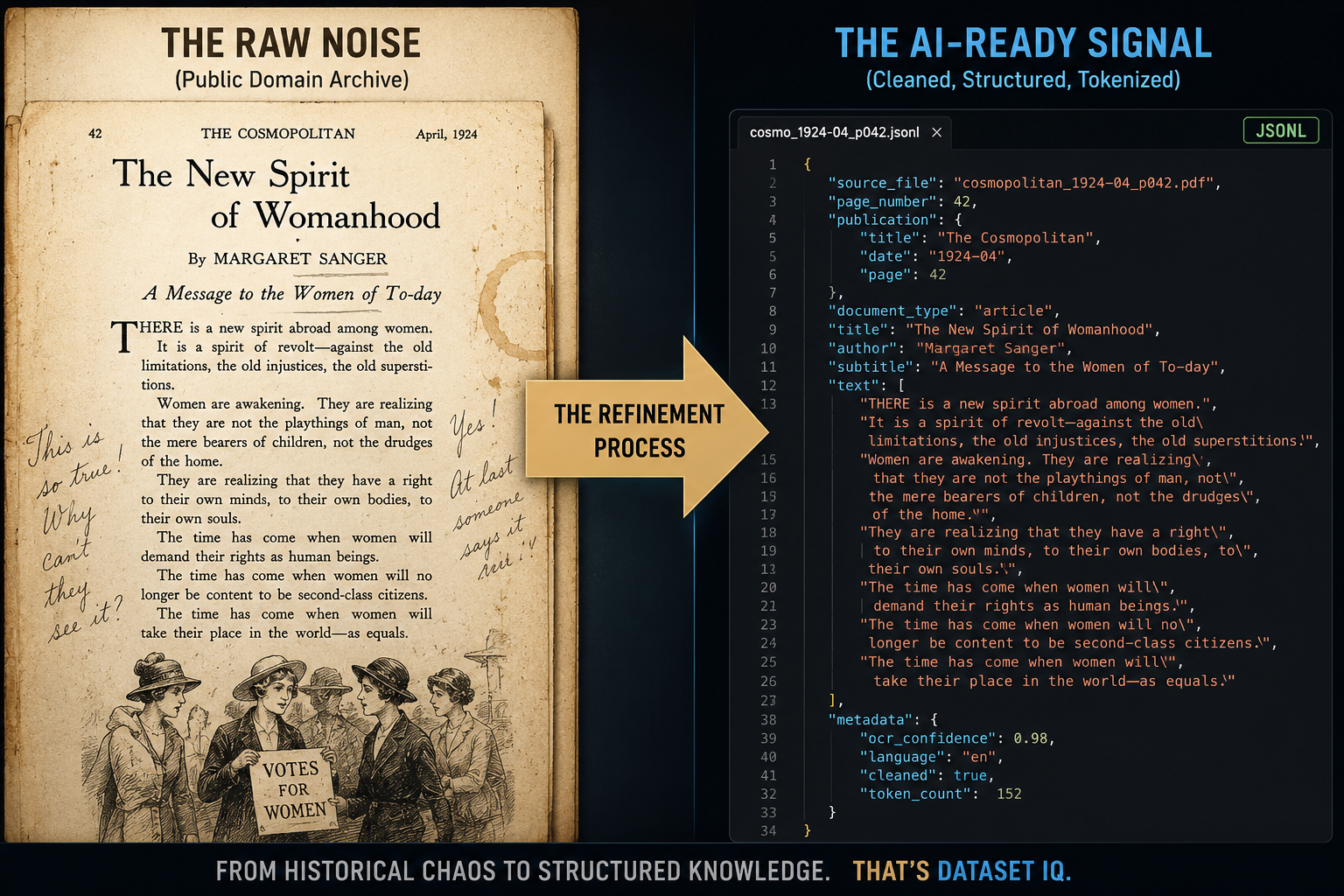
As AI becomes more specialized, terms like AI-ready data are appearing more frequently. But what does that actually mean? Many
What is “AI-ready” Historical Data? Read Post »
When we talk about AI in mental health today, the focus is almost always forward-looking. Smarter models. Faster diagnostics. More
When people talk about reducing bias in AI, the conversation almost always focuses on more data. More modern data.More real-time
Why Historical Medical Text is the Secret Weapon for Reducing AI Bias Read Post »

Most conversations about AI still revolve around performance, bigger models, faster outputs, more parameters. But almost no one stops to
Why Most AI Datasets Aren’t Built for Reliability Read Post »

Most people think AI is powerful because of the model. It’s not. It’s power comes from the data. And more
From Chaos to Structure: How Data Becomes Machine-Ready Read Post »

by Debbie Burgin | Founder/CEO A couple of months ago, my doctor gave me a prescription for a pain in
What Happens When AI Gets Your Health Advice Wrong? Read Post »

The Importance of Historical Data in AI Training (Complete Guide) Learn why historical data is critical for AI training. Discover
The Complete Guide to Historical Data in AI Training Read Post »

by Debbie Burgin | Founder, Foundation for Ethical AI & Devin Media Corp | Author, The Dollar Menu Data Crisis
AI Has a Data Problem. But It’s Not the One You Think Read Post »